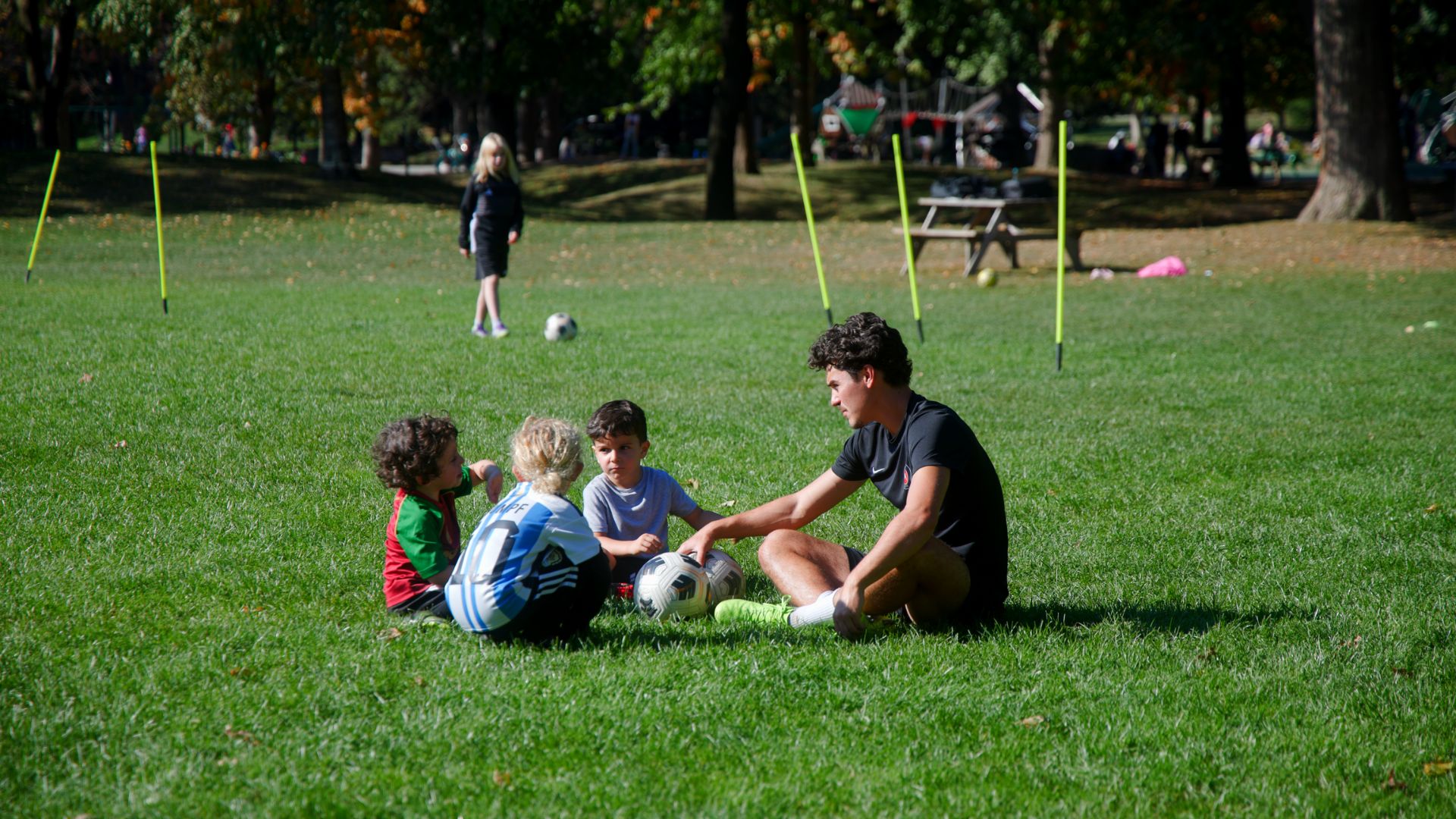
You already know the Saturday morning. Eighteen kids, one volunteer parent coach, a bag with four balls in it. Your child stands in a line waiting for a turn. Then they scrimmage, and your child drifts toward the sideline and waits for it to be over.
And you stand there thinking the thing no parent says out loud: they're not getting worse — but they're not getting better either.
You are not imagining it, and it is not your child's fault. It is also not the volunteer coach's fault; they are doing their best with eighteen kids and one hour. The problem is structural, and once you can name it, it is fixable in a single season.
First, the things that didn't work
Most Montreal parents arrive at our sessions having already tried three or four of these. Here is what each one actually delivers — including where we come out worse.
| Touches | Corrected live | Game pressure | Low cost | Teammates | |
|---|---|---|---|---|---|
| Municipal / rec soccer | No | No | Yes | Yes | Yes |
| Backyard practice | Partial | No | No | Yes | No |
| A week of summer camp | Partial | No | Partial | Partial | Yes |
| Private 1-on-1 trainer | Yes | Yes | No | No | No |
| Footie Elite (1 coach : 6 kids) | Yes | Yes | Yes | Partial | Partial |
We are not the cheapest and we are not a league. If your child needs teammates and a season, municipal soccer beats us and we will say so. What a large-group hour structurally cannot deliver is the first two columns.
Why each one falls short
Another season of municipal soccer
Same structure, same ratio, same result. Repeating an hour that didn't develop your child last year will not develop them this year. Time in the sport is not the same as time on the ball.
Practising in the backyard
No progression and no correction — and you're a parent, not a coach. It usually ends in an argument, and now the ball is attached to a bad memory.
More games, more tournaments
A game is a test, not a lesson. A child who can't receive under pressure doesn't learn to during a match — they hide from the ball instead, which is the exact opposite of what you wanted.
A week of summer camp
Forty kids, five days, mostly fun and games. Nothing retains, because skill is built by repetition across weeks — not by one intense week in July.
A private one-on-one trainer
Expensive, and it strips out the thing soccer actually is. One-on-one teaches a child to drill. It doesn't teach them to play, because there is no one to beat, no pressure, and no decision to make.
Now the part nobody explains
Skill is not something a child has. It is something a child accumulates. And it accumulates exactly one way: touches on the ball, under pressure, corrected in the moment.
So do the arithmetic on a normal Saturday. Eighteen kids. One ball in the scrimmage. Even if the ball were shared perfectly evenly — it never is — your child gets one eighteenth of the contact time. Subtract the instruction, the water break, the lining up, the waiting.
Municipal session
18 kids sharing one ball in play
1/18
Footie Elite session
6 kids per coach, everyone on a ball
1/1
Share of ball-contact time available to your child
Come count it yourself at a first session. We would far rather you verified this than believed it.
So your child isn't behind on talent. They're behind on volume. And volume compounds. A child who multiplies their touches at six doesn't look a bit better at seven — they look unrecognisable at nine.
The thing that changes how you shop for this
Selection doesn't measure talent. It measures touches.
Every tryout, every evaluation, every coach's end-of-season comment is measuring one thing: how many corrected repetitions that child has banked. Which means the kids who “have it” mostly just got there first — and that can be caught up.
This is the part we most want you to take away, whether or not you ever book with us. Your child was never being assessed on some fixed quality they either had or didn't have. They were being assessed on accumulated reps. That is a scheduling problem, not a genetic one.
You did almost everything right
You signed them up at four. You've never missed a Saturday. You bought the cleats, the ball, the shin guards that never stay up, and you stood in the cold in April. You are not a bad soccer parent — you are 99% of the way there.
You're missing one thing, and it isn't talent. It's touches. And that is the only thing our program is designed to fix.
What we actually do differently
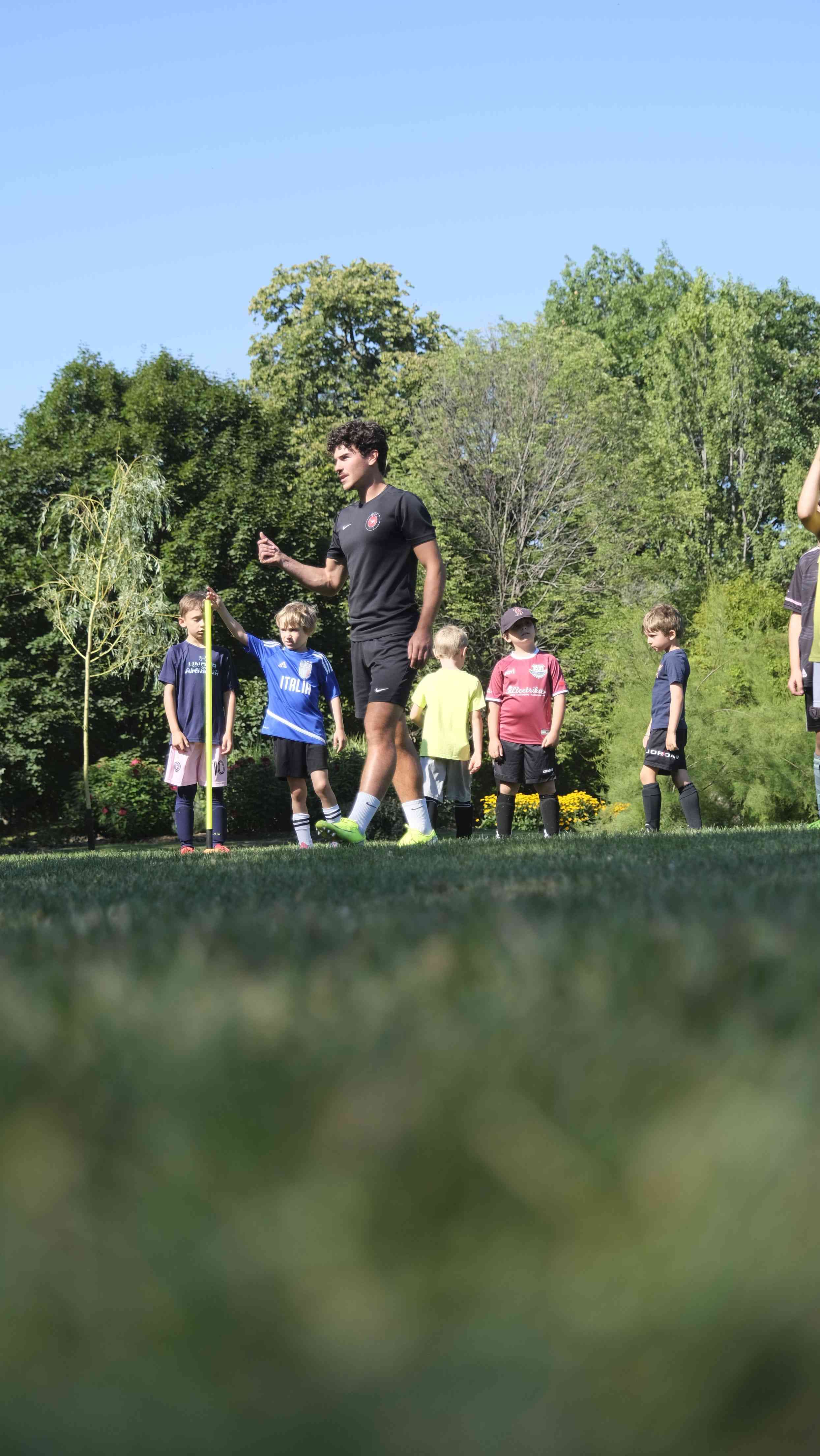
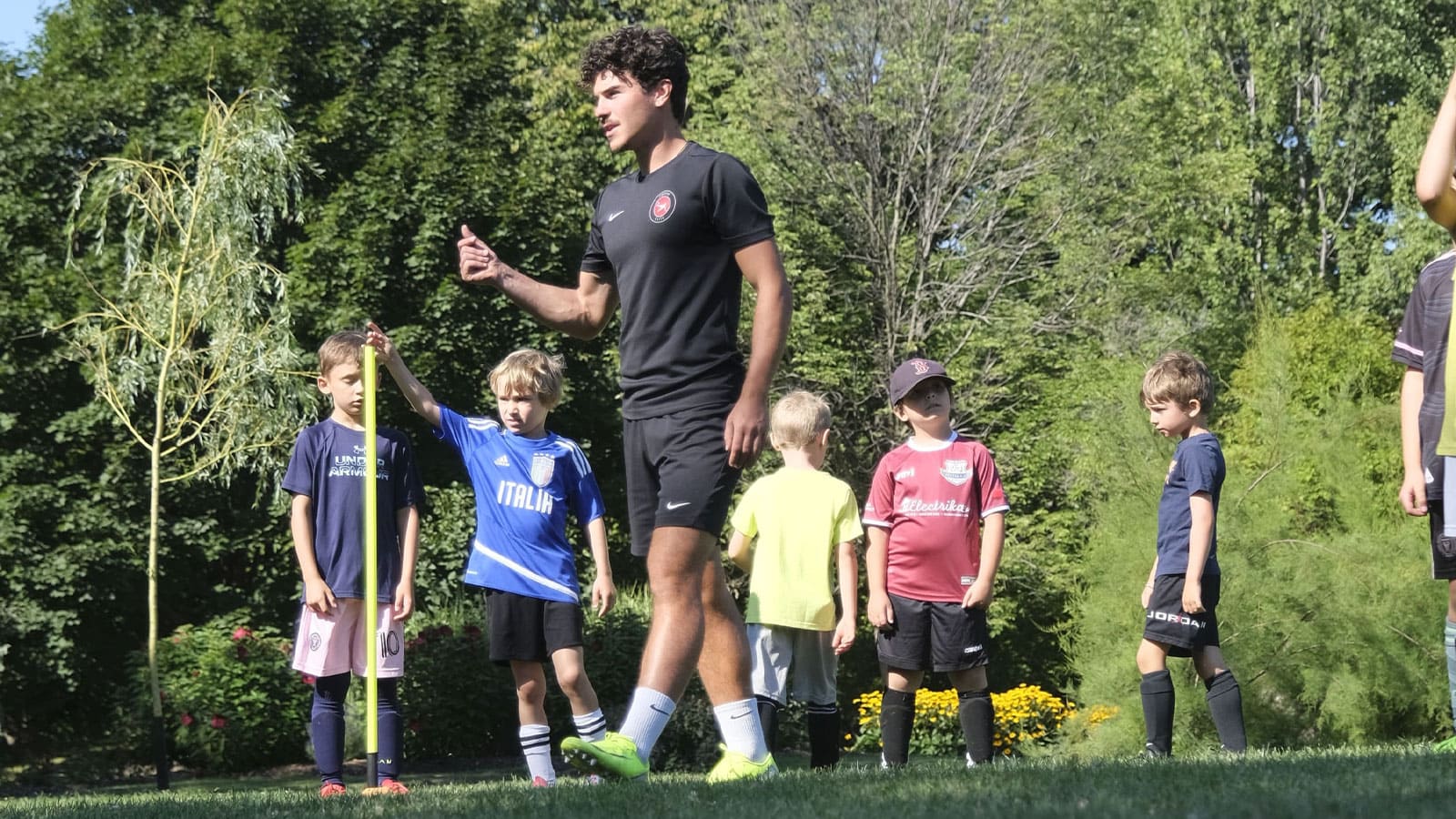
One coach for every six players. Not eighteen. Six. That single constraint is what makes everything below possible.
Everyone is on a ball, the entire hour
No lines. No waiting a turn. No standing in a bib watching someone else learn. This is where the volume comes from, and it's the whole reason the ratio matters.
Every repetition is contested
Unopposed touches don't transfer to Saturday. We keep everything small-sided and pressured, so what your child learns on Tuesday actually shows up in a game.
Corrections happen in the moment
At 1:6 a coach can see and fix each repetition as it happens. At 1:18 they can only manage a crowd. That is the difference between practising and improving.
Coached by players who actually played
So the correction is technically right the first time — and your child doesn't spend a season rehearsing a mistake that has to be un-taught later.
Banded by age and by level
Your child is never the worst in the group and never the best. Both extremes stall development — one through humiliation, the other through boredom.
The three people who built this
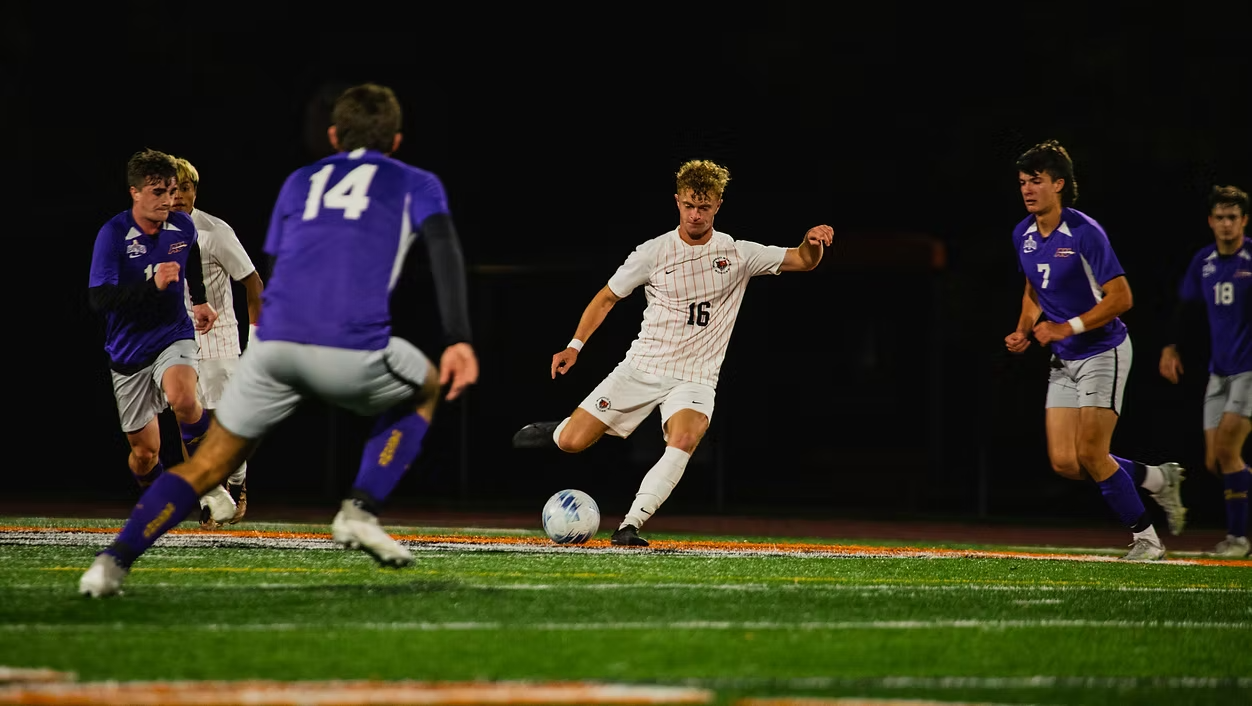
Julian Hughes
Former Bohemian FC U19s · NCAA
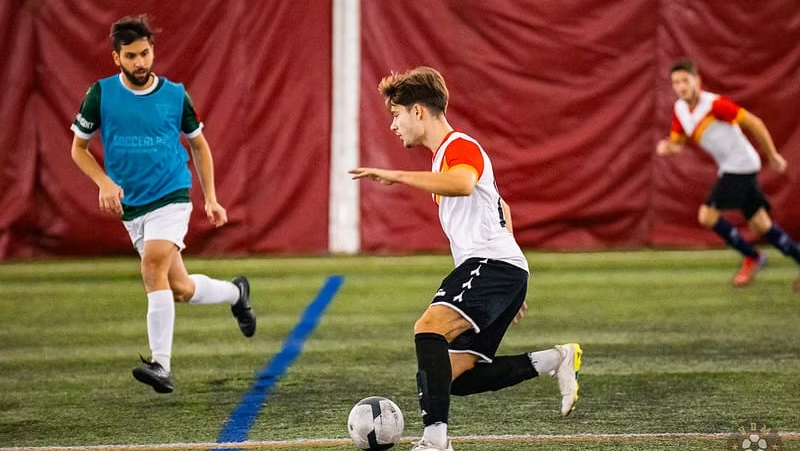
Nicola Guerguinov
FC National Sofia U19s · AS Laval, Ligue 1 Québec

Eric Koerich
McGill Varsity · CSMRO, Ligue 1 Québec
All three are founders, and all three still coach on the grass. That is deliberate — “Elite” describes who is coaching, not who is allowed in.